Chapter 3 · Lesson 1
Obligation to give way and to stop
After this lesson, you can
- say what give-way makes you do with speed and position
- say what stop adds on top: where the wheels stop
- decide give-way vs stop from B1 vs B2
- spot when you must stop anyway, even under B1
1. Give way (B1): show it early
Give way (väjningsplikt) is not a race to the line. Other drivers must be able to see, in good time, that you are going to wait. If you only slow at the last metre, you have not given way — you have forced them to guess.
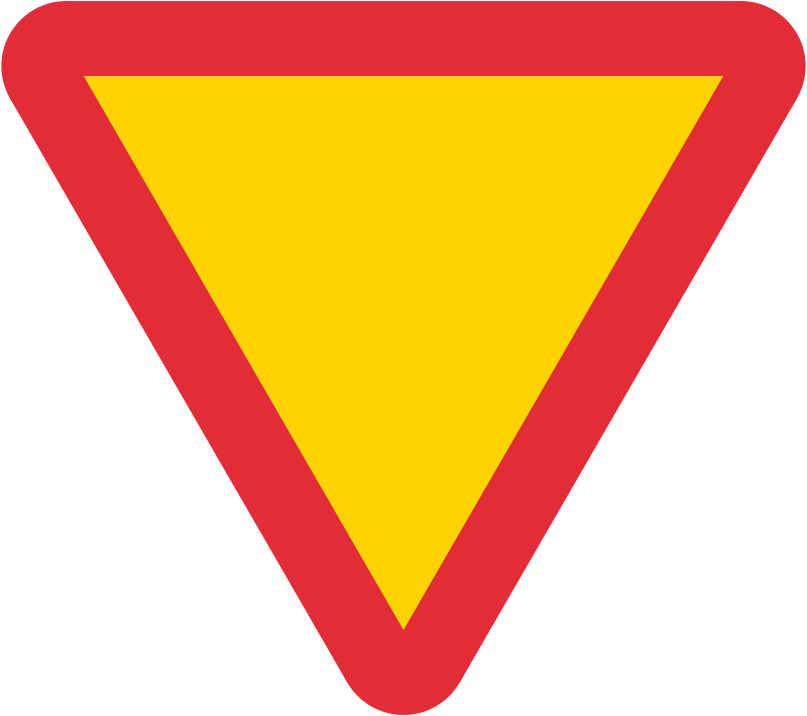
B1 where you join. A car comes from the left, another from the right. Who goes first?
Pick one answer to see why.
2. Stop (B2): wheels still at the line
Example
Second car in a stop-sign queue
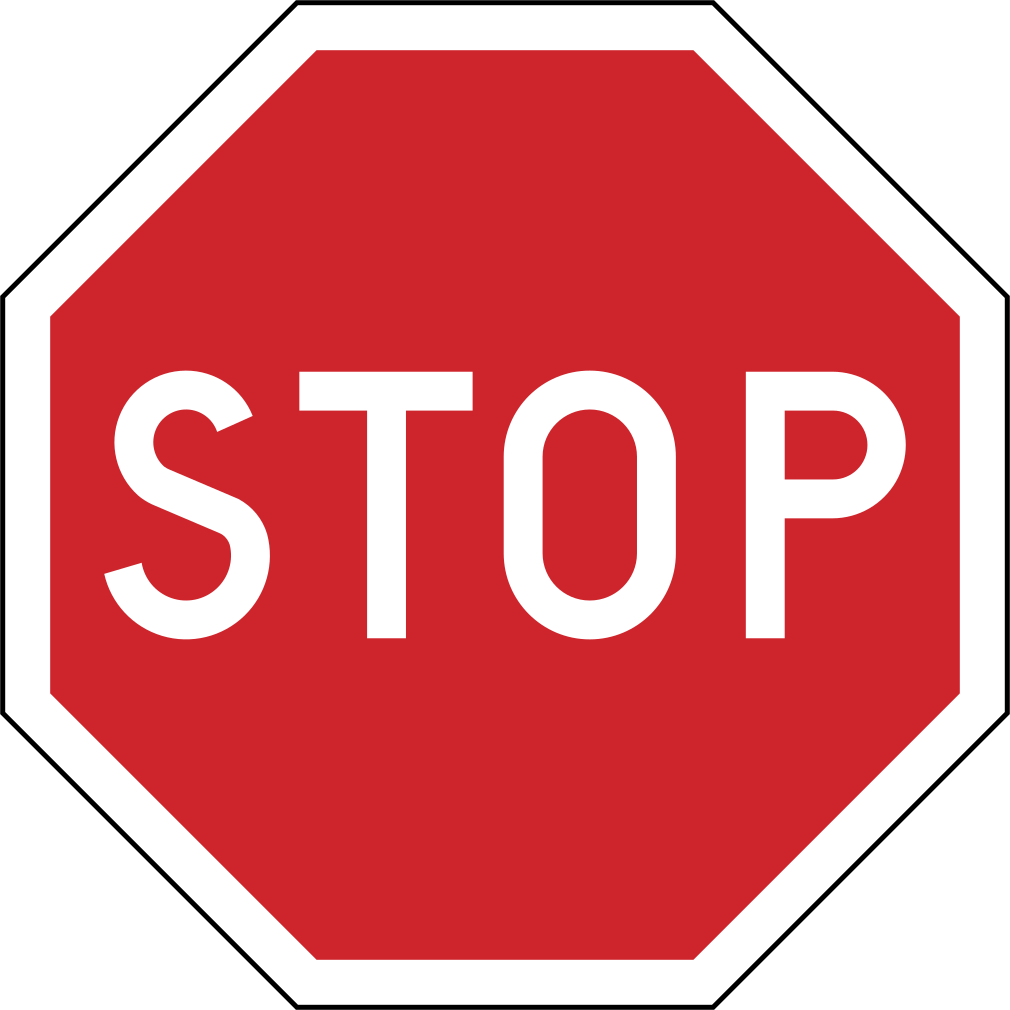
A queue at a B2 stop sign. The car ahead stops at the line and goes. You drive up behind. The crossing road looks empty, so you follow at walking pace without stopping.
Answer: Stop offence. Every vehicle stops at the line.
The line is personal. The car ahead having already cleared does not clear you. Your wheels must stand still at the line, then you make a fresh give-way check.
B2, good view, nobody coming. Must you still stop?
Pick one answer to see why.
| Give way (B1) | Stop (B2) | |
|---|---|---|
| Must you slow so others see the plan? | Yes | Yes |
| Must the wheels stand still? | Only if you cannot see, or traffic needs it | Always — at the line, or before the crossing road |
| Who do you yield to? | All traffic on the road you join | The same, after the stop |
| Empty road, good view | You may continue if it is clearly empty | You still stop first |
3. Common mistakes
- Under B1 I only yield to the right.You yield to all traffic on the road you join — left, right, and the overtaker you did not see.
- Walking pace past a stop line is a stop.Stop means the wheels stand still. Creeping through is still a stop offence.
- Second car in the queue is already cleared.Each vehicle stops at the line. Queues do not share stops.
- Good view means no stop under B1.True if you can actually see. A hedge, a van or a crest means you stop anyway because you cannot see.
Official source: Transportstyrelsen — Väjningsplikt
Official source: Trafikförordningen (1998:1276) 3 kap. 5, 19 §§
Sign artwork: public domain (Transportstyrelsen). Lesson text is a MinKörkort study draft — not the official legal wording.