Chapter 1 · Lesson 2
Defensive driving and what takes precedence
After this lesson, you can
- explain defensive driving as leaving margin for other people’s mistakes
- keep a usable gap, and keep your foot ready on the brake where children, buses or a hedge hide the view
- apply the precedence order when an officer, lights, signs and ordinary rules disagree
- treat a dark or flashing-amber signal as a fall-back to signs and rules, never as green
1. Leave a margin, then claim your rights
Defensive driving is a habit, not a separate set of signs. Leave room for what you cannot see yet. The gap ahead is your only spare second. Keep your foot ready on the brake when a ball rolls toward the street, when a bus stands at a stop, or when a hedge blocks your view. Assume the other person may not do the right thing.
The same habit includes making sure you have been seen. At a junction or a crossing, look at the other driver or pedestrian until you know they have noticed you. A green light or a B4 priority-road diamond does not replace that look.
2. When instructions disagree
One junction can show four things at once: a police officer or authorised guard waving, a red light, a B1 give-way triangle, and priority-to-the-right underneath. They are ranked. The higher one wins. The lower ones wait.
- A police officer or authorised guard — hand signals beat everything else.
- Traffic lights and lane signals that show a fixed light.
- Road signs and road markings — stop line, give-way teeth, arrows.
- General rules — priority-to-the-right, the turning rule, the obstruction rule.
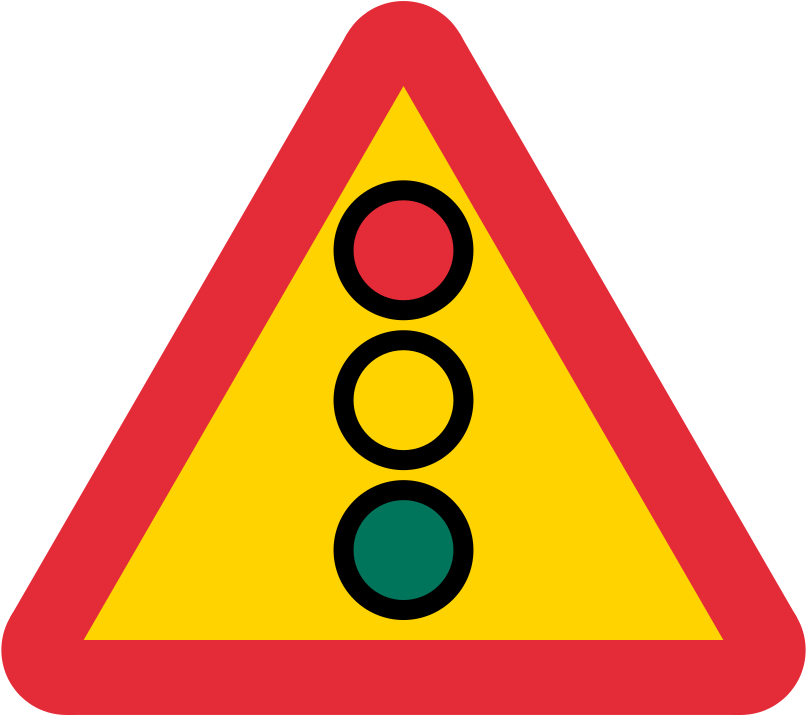
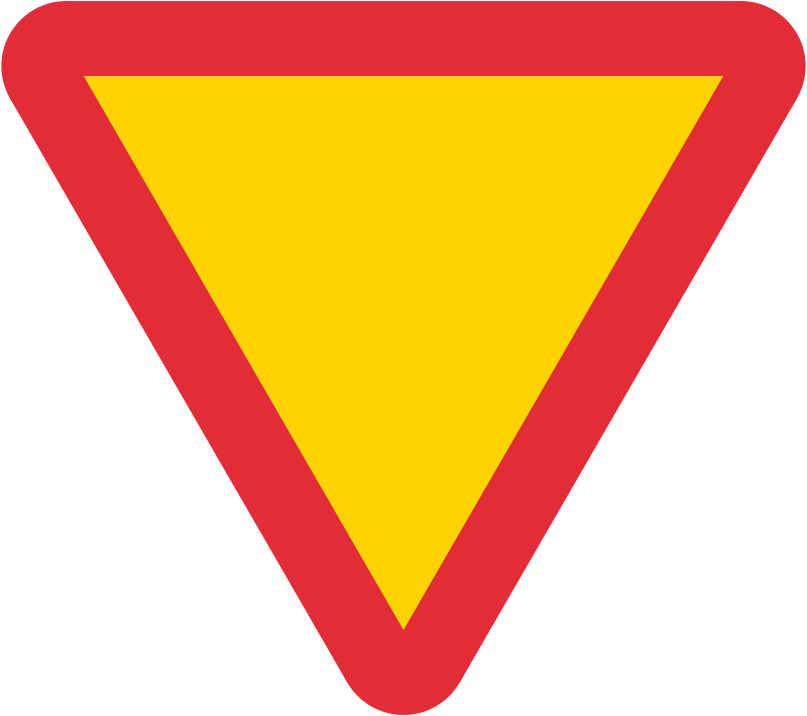

| Signal | What it means |
|---|---|
| Green | You may go if the way is clear. Care still applies. Do not enter if you will block the junction. |
| Amber | Stop if you can do it safely. Amber is not “hurry through.” |
| Red | Stop before the line. Creeping over because nothing is coming is still a red-light offence. |
| Flashing amber | The signal has stepped aside. Follow signs and ordinary rules, with extra care — not extra speed. |
| Dark / unlit | Same as flashing amber. Never treat dark as green. |
Two cases come up constantly. Flashing amber means proceed by signs and rules. Creeping over the stop line on red because nothing is coming is still a red-light offence.
Example
A guard waves you through red
Roadworks. The light facing you is red. A guard in a yellow vest waves traffic through. The car next to you stays put.
Answer: Drive through slowly, following the wave.
The guard’s signal is at the top of the order and beats the red light. Staying put on red here is the mistake. A person directing traffic outranks lights and signs.
The light is dark, there is no police officer, and B1 stands on your approach. Who decides?
Pick one answer to see why.
| What you see | Who wins |
|---|---|
| Officer or authorised guard | Their signal — even through red |
| Fixed red / amber / green | The light, then care |
| Dark or flashing amber | Signs, then ordinary rules |
| B1, B2, B4, or road markings | The sign or the paint |
| Nothing posted | Priority-to-the-right, turning, obstruction |
3. Common mistakes
- I had green, so the crash is their fault.Green decides who goes first, not who drove well. The duty of care still applies on green.
- Flashing amber means hurry before red.It means the signal has stepped aside. Signs and rules apply, with extra caution.
- A police wave is advice; the light is the law.The opposite. The officer’s signal beats lights, signs and ordinary rules.
- A big gap invites queue-jumpers, so keep it tight.A tight gap is what causes the crash. Two to three seconds, more in rain.
Official source: Transportstyrelsen — Generella trafikregler
Official source: Trafikförordningen (1998:1276) 2 kap. 1–3 §§
Sign artwork: public domain (Transportstyrelsen). Lesson text is a MinKörkort study draft — not the official legal wording.